
People often search for Sundar Pichai and Carl Icahn in the same breath. The reason is simple. Both names appear around one big event: Google’s purchase of Motorola Mobility in 2011.
But one shared headline does not mean one shared business. This guide separates fact from assumption. You will see what each man actually did, where their paths crossed, and where they never met at all. You will also learn whether Carl Icahn owns Alphabet stock today.
Are Sundar Pichai and Carl Icahn Business Partners?
No. Sundar Pichai and Carl Icahn are not business partners. Public records show no joint company, no shared fund, no co-investment, and no formal agreement between them.
They also work in very different worlds. Pichai is a long-time Google executive. He is now the chief executive of both Google and its parent company, Alphabet. Icahn is an activist investor. He buys large stakes in public companies and pushes them to change course.
The confusion comes from timing. In 2011, Google bought a company in which Icahn held a big stake. That put both names in the news cycle. Readers then linked the two men, even though the deal was not a partnership between them.
Here is a quick summary of the real relationship.
| Question | Short Answer |
|---|---|
| Are they business partners? | No |
| Do they share a company or fund? | No public record of one |
| Did their interests ever overlap? | Yes, through the 2011 Motorola Mobility deal |
| Was Icahn a buyer or a seller? | A shareholder of the company Google bought |
| Was Pichai at the negotiating table? | No public record places him there |
| Does Icahn hold Alphabet shares now? | Not in his latest public filing |
The Motorola Mobility Deal Connects Their Business Histories
In August 2011, Google agreed to buy Motorola Mobility for about $12.5 billion. The price was $40 per share in cash. That was a 63% premium over the previous closing price.
Google had a clear goal. It wanted to protect Android, its mobile operating system. Rivals were suing over smartphone patents. Google had also just lost an auction for thousands of Nortel patents. Motorola Mobility held roughly 24,000 patents and patent applications, which made it an attractive target.
The deal closed in May 2012. Later, Google sold Motorola’s handset business to Lenovo. It kept many of the patents. This single deal is the only real point where the Pichai and Icahn stories touch.
Carl Icahn owned about 11% of Motorola Mobility
Icahn was not a bystander in this story. He was the biggest shareholder of Motorola Mobility. Reuters reported that, as of July 2011, he held an 11.36% stake.
He had been involved with Motorola for years. He first invested in the older Motorola company in 2007. He then pushed hard for a split. In early 2011, Motorola divided into two firms: Motorola Mobility and Motorola Solutions.
Icahn also urged Motorola Mobility to find ways to unlock value in its patents. When Google made its offer, Icahn called it a great outcome for all shareholders. At the deal price, his stake was worth about $1.07 billion, according to Fortune.
Note what this means. Icahn gained as a shareholder. He did not buy anything from Google, and Google did not hire him. He simply owned shares of the target company.
Google was negotiating separately with Motorola
The talks ran between Google and the Motorola Mobility leadership. Motorola’s proxy statement describes the process in detail. Its chief executive, Sanjay Jha, met with senior Google leaders over several weeks in mid-2011.
Those Google leaders included Larry Page, then chief executive. Nikesh Arora, Andy Rubin, Kent Walker, and David Drummond also appear in the filing. Google’s first written offer came on August 1, 2011, at $30 per share. The final price rose to $40.
The negotiation took place between two companies and their boards. Shareholders like Icahn did not sit across the table from Google. They waited for the board’s decision and then voted.
The timeline below shows how fast it moved.
| Date | Event |
|---|---|
| 2007 | Icahn begins investing in Motorola |
| January 2011 | Motorola splits into Mobility and Solutions |
| Mid-July 2011 | Google and Motorola leaders hold early talks |
| July 2011 | Icahn holds an 11.36% stake in Motorola Mobility |
| August 1, 2011 | Google proposes $30 per share |
| August 15, 2011 | Deal announced at $40 per share |
| May 2012 | Deal closes |
Was Sundar Pichai Involved in Negotiating the Motorola Acquisition?
The public record does not show that he was. The proxy statement lists the Google executives who handled the talks. Pichai’s name is not among them. The deal was driven by Larry Page and his senior team.
At the time, Pichai worked on other products. He was best known for Chrome and Chrome OS. He did not lead Android yet. He took over Android in March 2013, after Andy Rubin moved on to other projects. By then, the Motorola deal had already closed.
That said, Pichai later worked with the results of the deal. As head of Android, he led the platform while Google still owned Motorola’s phone business. Google announced the sale of that business to Lenovo in early 2014. The sale was a company decision, not a Pichai and Icahn project.
So the honest answer has two parts:
- Pichai did not negotiate the 2011 acquisition, based on public filings.
- Pichai never negotiated with Icahn over Motorola.
Any article that claims otherwise is guessing.
Sundar Pichai’s Career Took a Different Route
Sundar Pichai grew up in India. He studied engineering at IIT Kharagpur. He later earned a master’s degree at Stanford and an MBA at Wharton. Before Google, he worked in materials engineering and then in consulting.
He joined Google in 2004. His early work focused on products that helped people use the web, such as the Google Toolbar. He then became a key figure behind the Chrome browser, which launched in 2008. Chrome OS followed.
His role grew step by step. He took charge of more products, including Google Drive. In 2013 he added Android to his duties. In August 2015, he became chief executive of Google. In December 2019, he also became chief executive of Alphabet.
Pichai is known for a calm, careful style. He is an insider who built his influence inside one company. He manages products, teams, and long-term strategy. He answers to Alphabet’s board and to shareholders.
Here are the main stages of his path:
- 2004: Joins Google
- 2008: Chrome launches under his product leadership
- 2013: Takes over Android
- 2015: Becomes Google’s CEO
- 2019: Becomes Alphabet’s CEO
Carl Icahn Built His Career From the Investor Side
Carl Icahn took the opposite path. He grew up in New York and studied philosophy at Princeton. He started on Wall Street in the 1960s. He later built his own investment firm.
Icahn became famous in the 1980s for hostile takeovers. His 1985 move on TWA is one of the best-known examples. Over time, he became the face of shareholder activism. His method is straightforward. He buys a large stake, then pressures management and the board.
His targets have included well-known firms such as Apple, Netflix, eBay, and Dell. In each case, he argued that the company could create more value for shareholders. Sometimes he pushed for buybacks. Sometimes he asked for a sale or a breakup.
Today, he leads Icahn Enterprises, a diversified holding company. Its public filings show a heavy focus on energy and industrial businesses.
Icahn’s style can be summed up in three habits:
- He takes large, visible stakes.
- He speaks publicly about what a company should do.
- He seeks board seats or changes in strategy.
The Motorola case fits this pattern. He pushed for a split, he pushed for patent value, and he profited when a buyer arrived.
Sundar Pichai vs. Carl Icahn: Two Forms of Corporate Influence
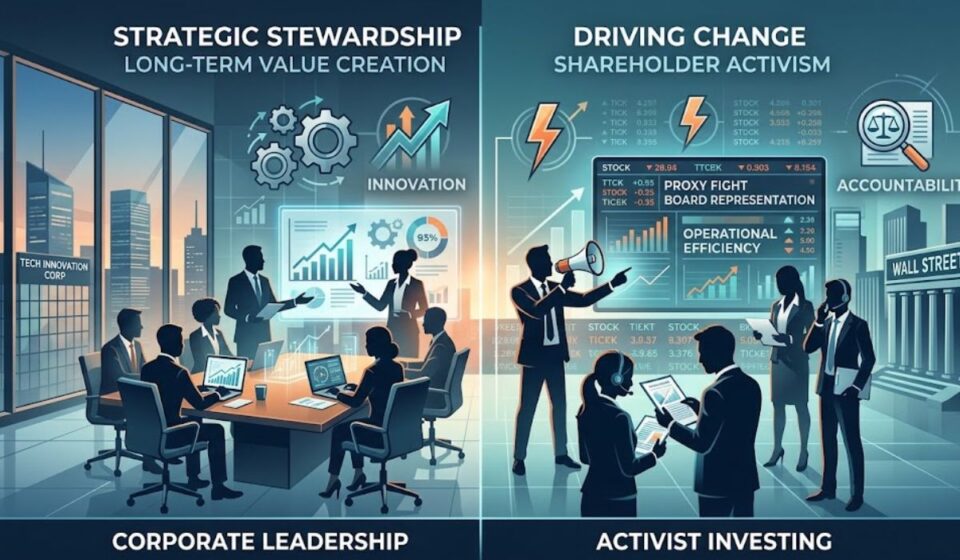
Both men shape big companies. They do it in opposite ways. Pichai leads from inside. Icahn pressures from outside.
A CEO controls daily decisions. He hires leaders, approves products, and sets plans. An activist has no such power on day one. He uses share ownership, public statements, and board votes to gain influence.
The table below compares them side by side.
| Factor | Sundar Pichai | Carl Icahn |
|---|---|---|
| Main role | Chief executive of Google and Alphabet | Activist investor and chairman of Icahn Enterprises |
| Source of power | Position inside the company | Ownership of shares |
| Typical goal | Build products and long-term growth | Raise shareholder value, often faster |
| Style | Quiet and consensus driven | Direct and public |
| Time horizon | Long term | Often medium term |
| Accountable to | Alphabet’s board and shareholders | His own investors and partners |
There is one more link worth noting. Icahn is exactly the kind of outside voice a CEO like Pichai must answer to. Any large shareholder can ask hard questions. But no record shows Icahn doing this at Alphabet.
So the two men represent two sides of the same system. One runs the company. The other pushes companies to perform. They met only in the background of a single deal.
Does Carl Icahn Own Alphabet Stock?
Based on his latest public filing, the answer appears to be no. Icahn Enterprises files a Form 13F each quarter. The filing for the first quarter of 2026 was posted in May 2026. It lists about a dozen holdings.
The largest positions are in his own company, Icahn Enterprises, and in CVR Energy. Other names in the filing include CVR Partners, Centuri, and International Flavors and Fragrances. Alphabet does not appear among the top holdings.
Keep three limits in mind when reading a 13F:
- It covers certain US-listed securities only.
- It reports quarterly, with a delay of up to 45 days.
- It is a snapshot, so positions can change after the report date.
That means nobody can predict future moves from this data. Icahn could buy Alphabet shares later. A big index fund or a retirement account might also hold small amounts. But there is no sign that he is an activist at Alphabet, and nothing ties him to Pichai’s leadership.
If you want to check for yourself, search for Icahn Enterprises on the SEC’s EDGAR website. Then open the latest 13F-HR filing.
Frequently Asked Questions
Are Sundar Pichai and Carl Icahn related?
No. They have no family relationship. The link people see comes from the 2011 Motorola Mobility deal.
Have Sundar Pichai and Carl Icahn worked together?
No public record shows that they have. They have never run a company or fund together.
Did Carl Icahn help Google buy Motorola Mobility?
Not directly. Icahn was a major Motorola shareholder who pushed for patent value. He welcomed the deal but did not negotiate it for Google.
Did Sundar Pichai negotiate with Carl Icahn over Motorola?
No. Public filings list other Google executives in the talks. Pichai is not named among them.
Is Carl Icahn an Alphabet shareholder?
His latest public 13F filing does not show Alphabet among his holdings. Positions can change, so check the newest filing.
What is the main difference between Pichai and Icahn?
Pichai runs Google and Alphabet from the inside. Icahn invests in companies and pushes them from the outside.
What is Sundar Pichai’s role at Google today?
He is the chief executive of Google and Alphabet. He has led Google since 2015 and Alphabet since 2019.
Conclusion
Sundar Pichai and Carl Icahn are not business partners. They have no shared company, no joint investment, and no public record of working together. Their names meet in one place: the 2011 sale of Motorola Mobility to Google. Icahn was the largest shareholder of the seller. Larry Page and his team led the buying side, and Pichai is not listed among the negotiators.
The better way to see them is as two kinds of influence. Pichai built his power inside Google and now leads Alphabet. Icahn built his power outside, through large stakes and public pressure. If you want the latest facts on his holdings, read the newest 13F filing. It is the most reliable source, and it shows no Alphabet stake at this time.